
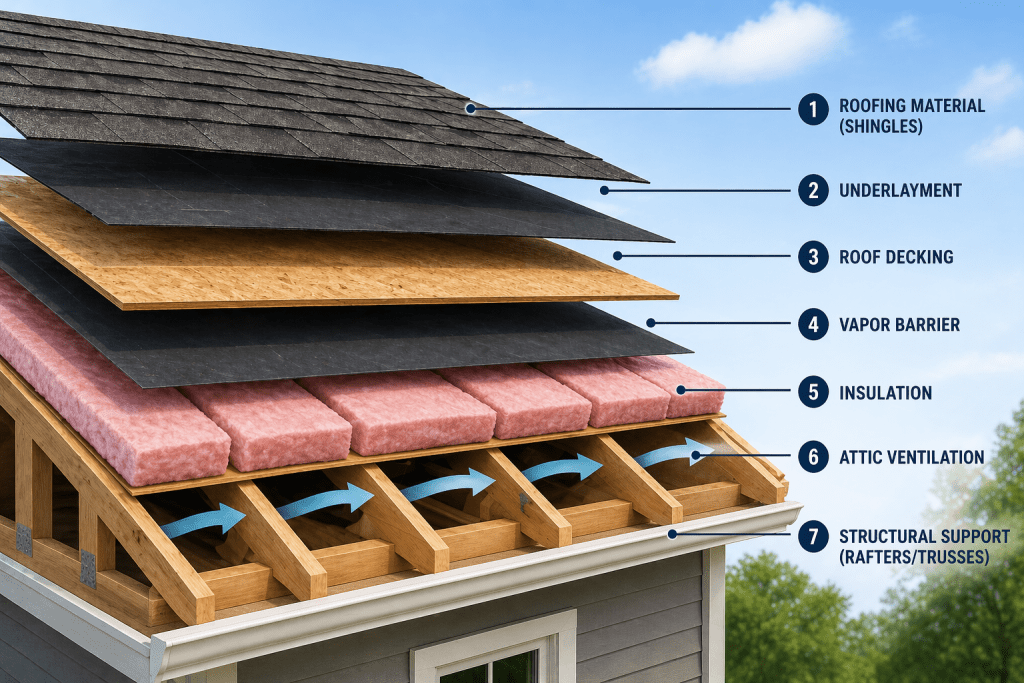
Most homeowners think of a roof as shingles. That’s understandable, shingles are what you see from the street. But the layers of a roof go much deeper than the surface, and each one plays a specific role in protecting your home from the elements. Whether you’re getting a new roof, dealing with storm damage, or just curious about what’s above your ceiling, understanding what’s in your roof can help you make smarter decisions as a homeowner.
Table of Contents
What the Layers of a Roof Are, And What Each One Does
A properly installed residential roof is a system, not just a surface. Each component is designed to work with the others. Skip one, cut corners on another, and the whole system can fail faster than it should. Here’s how it breaks down from the bottom up.
1. The Roof Deck (Sheathing)
The roof deck is the structural foundation of everything above it. It’s typically made of oriented strand board (OSB) or plywood and is nailed directly to your home’s rafters or trusses. Everything else in your roofing system gets fastened to or sits on top of this layer.
A compromised deck, one that’s rotted, soft, or warped, can’t support the layers above it properly. That’s why a thorough roof inspection or replacement always includes a check of the deck’s condition. If sections are damaged, they need to be replaced before anything else goes on top.
2. Ice and Water Shield
Directly on top of the deck in vulnerable areas, contractors install a self-adhering waterproof membrane called ice and water shield. This layer is especially critical in climates like Central Missouri, where freeze-thaw cycles can cause ice dams along the eaves and around roof penetrations like chimneys, skylights, and valleys.
Ice and water shield seals tightly around nail penetrations, which helps prevent water from sneaking into your home even if moisture gets under the shingles above it. It’s typically installed along the eaves, in valleys, and around any roof penetrations, not across the entire roof surface.
3. Roofing Felt (Underlayment)
Over the rest of the deck, installers apply roofing felt, also called underlayment. This layer acts as a secondary moisture barrier between the deck and the shingles. It provides temporary protection during installation and an added layer of defense after.
There are two main types:
- Traditional asphalt-saturated felt (15 lb. or 30 lb.): the industry standard for decades, still widely used
- Synthetic underlayment: lighter, more tear-resistant, and more water-resistant than traditional felt; increasingly common in premium installations
The underlayment won’t stop a sustained leak on its own, but it buys time and reduces the risk of water damage if a shingle is ever compromised.
4. Starter Strips
Before the first course of shingles goes down, installers place starter strips along the eaves and rakes (the edges) of the roof. These are pre-applied adhesive strips that seal the bottom edge of the first shingle row.
Without starter strips, wind can get under the leading edge of the shingles and lift or peel them back. They’re a small component with a big job, and one that some contractors skip or substitute with cut-up shingles as a cost-cutting measure. That’s a shortcut worth asking about when comparing quotes.
5. Shingles
Shingles are the outermost layer, the primary defense against rain, hail, UV rays, wind, and debris. They’re also what gives your roof its curb appeal. Asphalt shingles are the most common choice for residential roofing in Missouri, and they come in several grades:
- 3-tab shingles: the most basic option, flat and uniform in appearance, thinner profile
- Architectural asphalt shingles: the most popular choice today, with a layered look and improved durability
- Premium (luxury) shingles: thicker, designed to mimic the look of slate or wood shake with enhanced performance
- Impact-resistant (IR) shingles: built with a reinforced mat to withstand hail and high winds; can qualify for homeowner’s insurance discounts in some cases
Metal roofing is also an option worth considering for its longevity. Steel panels, including corrugated metal and exposed fastener systems, can last two to three times longer than asphalt when properly installed.
Learn more about asphalt shingles here: The Ultimate Guide to Choosing Asphalt Shingles for Your Home
6. Ridge Cap Shingles
At the peak of the roof where two slopes meet, standard field shingles aren’t enough. Ridge cap shingles are specifically designed for this exposed area. They’re thicker, pre-bent, and installed to overlap properly so water can’t work its way in at the peak.
Using the wrong material at the ridge is a common cut corner. Properly installed ridge caps are a sign of quality workmanship.
7. Flashings
Flashing isn’t a single layer so much as a set of metal components installed wherever the roof meets a vertical surface or has a penetration. Common flashing locations include:
- Around chimneys
- Along dormers and walls
- In roof valleys
- Around skylights and vent pipes
Flashing is usually made of galvanized steel or aluminum and is designed to direct water away from seams and joints, the most vulnerable spots on any roof. Failed or improperly installed flashing is one of the most common causes of roof leaks, even on roofs that are otherwise in good shape.
Learn how flashings add to a roof replacement quote here: How to Spot Common Hidden Costs in Roof Replacement Quotes
Why Every Layer of Your Roof Matters
A roof that’s missing or has a compromised component won’t perform the way it should, and in Missouri, where severe thunderstorms, hail, and ice are all real seasonal threats, a complete and properly installed roofing system isn’t optional. Cutting corners on underlayment or skipping starter strips might not be visible from the ground, but those shortcuts show up eventually in the form of leaks, early shingle failure, or storm damage that could have been avoided.
That’s why it’s worth understanding what goes into a roof before you agree to a replacement or repair so you can ask the right questions and know whether you’re getting what you’re paying for.
Get a Free Roof Inspection From a Central Missouri Expert
Have questions about your roof’s condition or what materials are right for your home? Resolve Roofing serves Columbia, Ashland, Jefferson City, Fulton, and the surrounding Central Missouri area. We offer free inspections and walk you through every part of the process.
